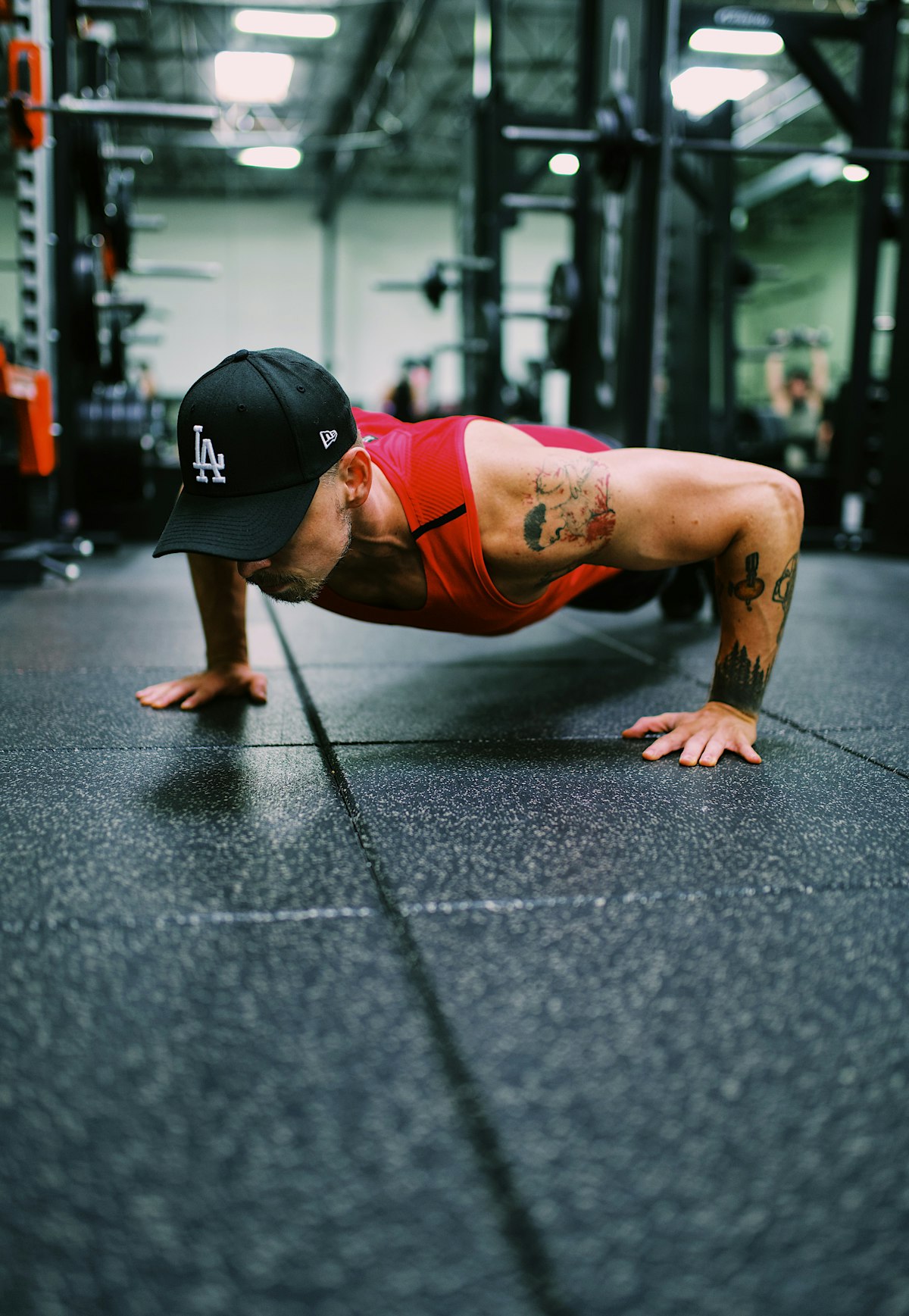
The Gym-Free Path to a Powerful Physique
Walk into any commercial gym and you'll find rows of machines, racks of dumbbells, and cable stations — all designed to provide progressive resistance for muscle growth. But some of the most impressive physiques in history were built with nothing more than body weight.
Gymnasts, military special operators, and calisthenics athletes demonstrate that external resistance isn't a prerequisite for building serious strength and muscle. The question isn't whether bodyweight training works — it's whether you know how to program it correctly.
The Science of Bodyweight Hypertrophy
Muscle growth requires mechanical tension, metabolic stress, and muscle damage — the three primary mechanisms identified by Dr. Brad Schoenfeld in his landmark 2010 review in the Journal of Strength and Conditioning Research. Calisthenics can deliver all three when properly programmed.
Mechanical tension is created by manipulating leverage. A push-up loads approximately 65% of your body weight through the chest, shoulders, and triceps. An archer push-up shifts that to roughly 80-85% on the working arm. A one-arm push-up progression approaches 90-95%. These forces are more than sufficient to stimulate hypertrophy.
A 2017 study in the Journal of Exercise Science & Fitness compared eight weeks of push-up training (using progressive variations) to bench press training at equivalent relative intensity. Both groups showed similar increases in muscle thickness and one-rep-max bench press strength, challenging the assumption that external loads are inherently superior.
The Foundational Movement Patterns
Effective calisthenics training covers six fundamental patterns:
1. Horizontal Push (Push-Ups)
Progression ladder:
- Wall push-ups → Incline push-ups → Standard push-ups → Diamond push-ups → Decline push-ups → Archer push-ups → One-arm push-up progression
A 2015 study in the Journal of Physical Therapy Science showed that diamond push-ups activated the triceps brachii by 38% more than standard push-ups, while decline push-ups increased upper chest activation by 25% compared to the flat variation.
2. Horizontal Pull (Rows)
Progression ladder:
- High inverted rows → Standard inverted rows → Feet-elevated rows → Archer rows → Front lever progressions
Inverted rows on a bar, rings, or even a sturdy table are the bodyweight equivalent of barbell rows. They train the entire posterior chain — lats, rhomboids, rear delts, and biceps.
3. Vertical Push (Dips and Handstand Push-Ups)
Progression ladder:
- Bench dips → Parallel bar dips → Ring dips → Pike push-ups → Wall handstand push-ups → Freestanding handstand push-ups
Dips are among the most effective upper-body exercises period. A 2018 EMG study in the Journal of Sports Sciences found that parallel bar dips activated the pectoralis major and anterior deltoid at intensities comparable to the barbell bench press.
4. Vertical Pull (Pull-Ups)
Progression ladder:
- Dead hangs → Scapular pulls → Negative pull-ups → Band-assisted pull-ups → Full pull-ups → Weighted pull-ups → L-sit pull-ups → Muscle-ups
The pull-up is the king of upper-body calisthenics exercises. A 2010 study in the Journal of Strength and Conditioning Research showed that pronated pull-ups produced significantly higher lat activation than any lat pulldown variation tested.
5. Squat
Progression ladder:
- Assisted squats → Bodyweight squats → Bulgarian split squats → Skater squats → Shrimp squats → Pistol squats
The pistol squat loads one leg with 100% of your body weight through a full range of motion — comparable to a barbell back squat at bodyweight. A 2019 study in the International Journal of Exercise Science found that single-leg squat variations produced similar quadriceps and glute activation to bilateral squats at equivalent relative intensities.
6. Hinge (Glute-Ham Raise / Nordic Curl)
Progression ladder:
- Hip bridges → Single-leg hip bridges → Hamstring walkouts → Negative Nordic curls → Full Nordic curls
The Nordic hamstring curl has become one of the most researched injury-prevention exercises in sports. A 2019 meta-analysis in the British Journal of Sports Medicine found it reduced hamstring injury rates by 51% in athletes.
Programming for Muscle Growth
The most common calisthenics mistake is doing endless reps of easy exercises. For hypertrophy, research consistently shows that the 6-30 rep range can build muscle effectively, provided sets are taken close to failure (within 2-3 reps of failure).
Sample 4-Day Upper/Lower Split
Upper A (Monday)
| Exercise | Sets × Reps | Tempo |
|---|---|---|
| Pull-ups (weighted if needed) | 4 × 6-10 | 3-1-1-0 |
| Dips (weighted if needed) | 4 × 8-12 | 3-1-1-0 |
| Inverted rows (feet elevated) | 3 × 10-15 | 2-1-2-0 |
| Diamond push-ups | 3 × 12-20 | 2-0-1-0 |
| Face pulls (with band) | 3 × 15-20 | 2-1-2-0 |
Lower A (Tuesday)
| Exercise | Sets × Reps | Tempo |
|---|---|---|
| Pistol squat progression | 4 × 5-8 each | 3-1-1-0 |
| Nordic curl progression | 4 × 4-8 | 4-1-1-0 |
| Walking lunges | 3 × 12-15 each | 2-0-1-0 |
| Single-leg calf raises | 4 × 12-20 | 2-1-2-0 |
| L-sit hold | 3 × 20-30 sec | Isometric |
Upper B (Thursday)
| Exercise | Sets × Reps | Tempo |
|---|---|---|
| Handstand push-up progression | 4 × 5-8 | 3-1-1-0 |
| Chin-ups | 4 × 8-12 | 3-1-1-0 |
| Archer push-ups | 3 × 6-10 each | 3-0-1-0 |
| Ring rows (supinated grip) | 3 × 10-15 | 2-1-2-0 |
| Ring support hold | 3 × 20-30 sec | Isometric |
Lower B (Friday)
| Exercise | Sets × Reps | Tempo |
|---|---|---|
| Shrimp squat progression | 4 × 6-10 each | 3-1-1-0 |
| Single-leg RDL | 3 × 10-12 each | 3-0-1-0 |
| Step-ups (weighted if available) | 3 × 10-15 each | 2-0-1-0 |
| Copenhagen plank | 3 × 20-30 sec each | Isometric |
| Hanging leg raises | 3 × 10-15 | 2-0-2-0 |
Progressive Overload Without Weights
The cornerstone principle of muscle growth is progressive overload — consistently increasing the demand placed on your muscles. In calisthenics, you achieve this through:
- Harder progressions: Moving from push-ups to archer push-ups adds significant load
- Slower tempos: A 5-second eccentric (lowering) phase dramatically increases time under tension
- Reduced leverage: Elevating your feet, extending your arms, or shifting to single-limb variations
- Added volume: More sets or more training days per week
- Shorter rest periods: Increasing metabolic stress
- Pauses: Adding a 2-3 second pause at the hardest point of the movement
- External load: A weighted vest or dip belt provides unlimited scalability
When Bodyweight Isn't Enough
Intellectual honesty matters: calisthenics has limitations. Training legs above an intermediate level is difficult without external resistance, especially for larger athletes. Posterior chain development beyond Nordic curls is challenging. And progressive overload becomes less straightforward as you advance.
The solution isn't abandoning calisthenics — it's integrating it. Many elite strength coaches, including Coach Sommer of Gymnastics Bodies, recommend combining calisthenics skill work with barbell training for lower body and pulling movements. This hybrid approach captures the unique benefits of bodyweight training — joint health, proprioception, relative strength — while filling the gaps.
Whether you choose pure calisthenics or a hybrid approach, the principle remains: your body is the most versatile piece of training equipment you will ever own.
Comments
Sign in to join the conversation
Sign In