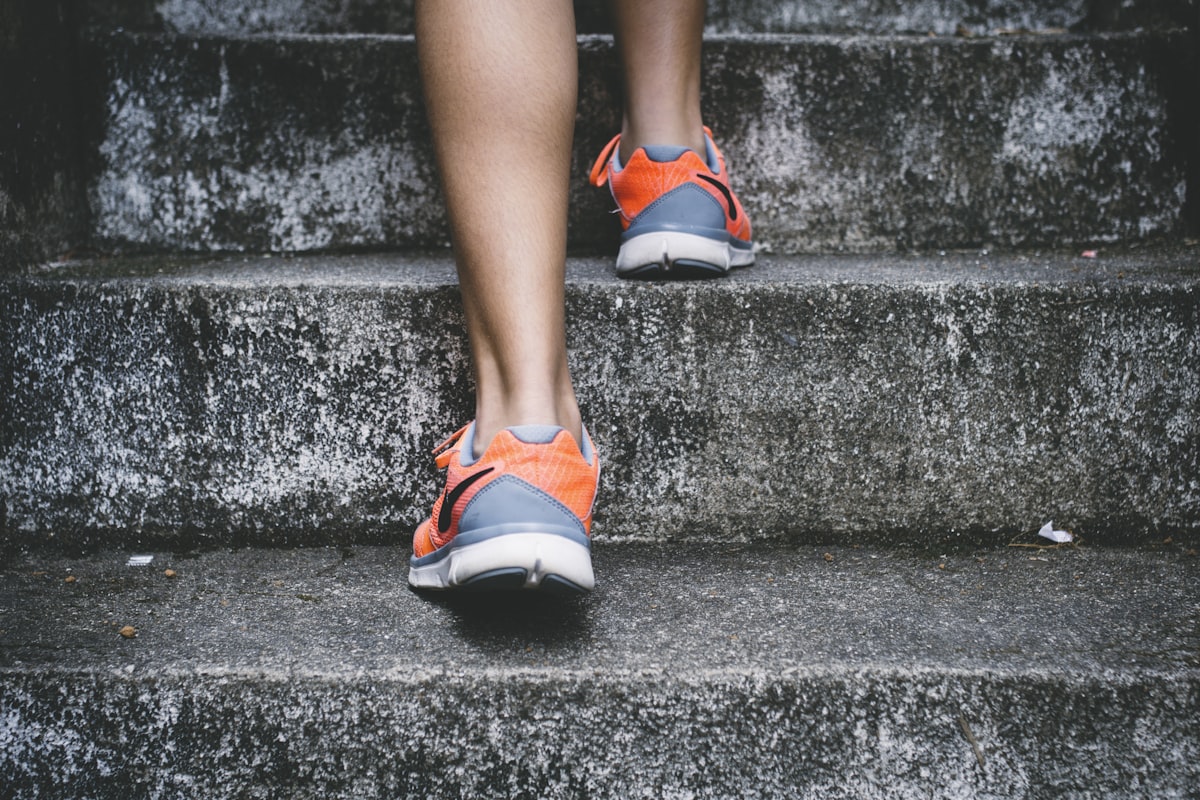
The Simplest Exercise Everyone Overlooks
In a fitness culture that glorifies intensity — HIIT workouts, heavy lifting, brutal circuits — walking gets dismissed as exercise for your grandparents. But the research tells a different story. Walking is one of the most effective, sustainable, and evidence-backed strategies for fat loss, and it does so without the injury risk, recovery demands, or adherence challenges of more intense exercise.
If you're trying to lose weight and you're not deliberately walking more, you're leaving one of the most powerful tools on the table.
The Caloric Math of Walking
A 200-pound man burns approximately 100-120 calories per mile of walking, regardless of speed. Walk at a brisk 3.5 mph pace and that's roughly 350-420 calories per hour. At 4.0 mph, it climbs to 400-480 calories per hour.
These numbers may seem modest compared to running (600-800 calories per hour), but the comparison misses a critical point: walking is sustainable daily without recovery costs. Running five days a week creates significant joint stress, cortisol elevation, and injury risk. Walking 10,000 steps daily — roughly 5 miles — can be done every single day without rest days, without soreness, and without the elevated cortisol that accompanies high-intensity exercise during a caloric deficit.
Over a week, 10,000 daily steps burns approximately 2,500-3,500 additional calories for a 200-pound man. That's 0.7-1.0 pounds of fat loss per week from walking alone — before any dietary changes.
The NEAT Advantage
Walking's greatest contribution to fat loss isn't during the walk itself. It's through its effect on Non-Exercise Activity Thermogenesis (NEAT) — the energy you burn through all daily movement that isn't planned exercise.
Research by Dr. James Levine at the Mayo Clinic showed that NEAT accounts for anywhere from 200 to 2,000 calories per day and is the most variable component of daily energy expenditure. During caloric restriction, NEAT drops unconsciously as your body conserves energy. A 2016 study in Obesity confirmed that dieters reduced their spontaneous daily movement by 200-400 calories per day without realizing it.
Setting a daily step target counteracts this decline. A 2021 study in The International Journal of Behavioral Nutrition and Physical Activity found that participants who tracked steps and maintained a daily target experienced significantly less NEAT reduction during weight loss than those who didn't track.
Walking Preserves Muscle
One of walking's most underappreciated benefits is its muscle-sparing effect during a caloric deficit. High-intensity cardio — particularly long-duration steady-state running — can contribute to muscle loss when combined with caloric restriction. A 2012 meta-analysis in the Journal of the International Society of Sports Nutrition found that excessive cardio during a deficit was associated with greater lean mass losses.
Walking, being low-intensity, primarily uses fatty acids as fuel rather than glycogen or amino acids. It also generates minimal cortisol compared to intense exercise. This makes it the ideal form of cardio to pair with resistance training during a fat loss phase.
A 2014 study in Obesity found that combining resistance training with walking (rather than running or cycling) during a caloric deficit produced superior body composition outcomes — more fat loss and better muscle retention.
The Hormonal Benefits
Cortisol Management
Unlike high-intensity exercise, which temporarily spikes cortisol (the stress hormone), walking actively reduces cortisol. A 2018 study in Health Promotion Perspectives found that 30 minutes of walking in a natural environment reduced cortisol levels by an average of 12% and significantly improved self-reported stress and mood.
This matters enormously during a fat loss phase because elevated cortisol promotes water retention (masking fat loss on the scale), encourages visceral fat storage, and accelerates muscle breakdown. Walking after meals, during work breaks, or in the morning helps maintain a favorable hormonal environment for fat loss.
Insulin Sensitivity
Post-meal walking is one of the most powerful blood sugar management tools available. A 2022 meta-analysis in Sports Medicine found that walking for as little as 2-5 minutes after eating significantly reduced post-meal glucose and insulin spikes. A 2016 study in Diabetologia found that three 10-minute walks after meals were more effective at controlling blood sugar than a single 30-minute walk at another time.
Lower insulin levels between meals create a hormonal environment that favors fat oxidation. By smoothing out blood sugar curves, post-meal walking helps your body stay in a fat-burning state for more of the day.
A Practical Walking Protocol for Fat Loss
Phase 1: Build the Habit (Weeks 1-2)
- Target: 6,000-7,000 steps daily
- Add a 15-minute walk after lunch and dinner
- Park farther from entrances
- Take phone calls while walking
Phase 2: Build Volume (Weeks 3-4)
- Target: 8,000-9,000 steps daily
- Add a 20-30 minute morning walk (fasted or with coffee)
- Replace one driving errand per week with walking
- Walk during work meetings when possible
Phase 3: Optimize (Weeks 5+)
- Target: 10,000-12,000 steps daily
- Maintain post-meal walks (10-15 minutes after each meal)
- Add one longer walk per week (45-60 minutes) — combine with a podcast or audiobook
- Consider a walking pad or under-desk treadmill for work-from-home days
Advanced Walking Strategies
Weighted walks: Wearing a 20-40 pound weighted vest increases caloric expenditure by approximately 12-20% and provides additional bone-loading stimulus. A 2013 study in Medicine & Science in Sports & Exercise found that weighted walking increased energy expenditure proportionally to the added load.
Incline walking: A 2012 study in Gait & Posture showed that walking on a 10% incline increased caloric expenditure by approximately 50% compared to flat walking at the same speed. If you're using a treadmill, try 3.0-3.5 mph at a 10-15% incline for a surprisingly challenging workout often called "the 12-3-30" (12% incline, 3 mph, 30 minutes).
Rucking: Walking with a loaded backpack (20-40 pounds) combines the benefits of walking with resistance training for the posterior chain. Military research from the Journal of Strength and Conditioning Research shows that rucking burns 2-3 times more calories than unloaded walking and builds significant core and postural endurance.
Why Walking Wins Long-Term
A 2019 study in JAMA Internal Medicine followed 16,741 women for 4.3 years and found that as few as 4,400 steps per day was associated with significantly lower mortality rates, with benefits increasing up to 7,500 steps per day. For men, a 2020 study in JAMA showed that 8,000-12,000 steps per day was associated with a 51-65% lower risk of all-cause mortality.
The most important exercise for fat loss isn't the one that burns the most calories per minute. It's the one you'll actually do consistently, day after day, for months and years. Walking fits seamlessly into any lifestyle, requires no equipment or gym membership, carries virtually zero injury risk, preserves muscle mass, manages cortisol, and creates a reliable caloric deficit that compounds over time. It's the most underrated tool in the fat loss toolbox.
Comments
Sign in to join the conversation
Sign In