Shinrin-Yoku: The Medicine of Being Among Trees
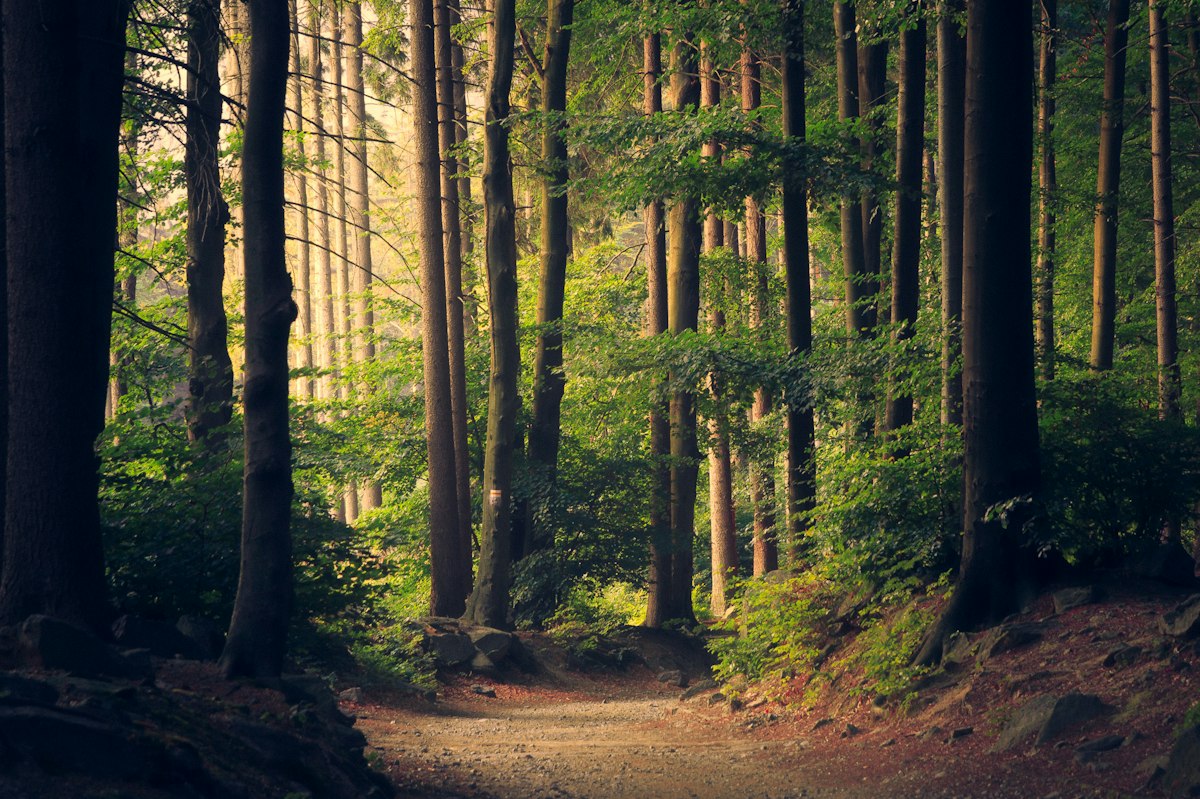
In 1982, the Japanese Ministry of Agriculture, Forestry and Fisheries coined the term shinrin-yoku — literally "forest bathing" — as a public health initiative to encourage citizens to spend time in Japan's extensive forest lands. It wasn't exercise. It wasn't hiking. It was simply being present in a forest environment, engaging all five senses.
Four decades later, what began as a cultural wellness practice has accumulated a remarkable body of scientific evidence. Forest bathing reduces cortisol, lowers blood pressure, enhances immune function, and improves mood and cognitive performance — with effects that persist for days or weeks after a single session.
The Physiological Evidence
Stress Reduction
The most extensively documented benefit of forest bathing is stress reduction, measured through both subjective reports and objective biomarkers.
Dr. Qing Li, a professor at the Nippon Medical School and the world's leading forest medicine researcher, has published dozens of studies establishing the cortisol-reducing effects of forest environments. His 2010 study in Environmental Health and Preventive Medicine compared physiological responses in 280 participants across 24 forest sites. Results:
- Cortisol levels: 12.4% lower in forest vs. urban environments
- Sympathetic nervous activity: 7% lower (indicating reduced fight-or-flight activation)
- Blood pressure: Systolic reduced by 1.7%, diastolic by 1.5%
- Heart rate: 3.9% lower in the forest
A 2019 meta-analysis in Environmental Research — covering 20 studies and 732 participants — confirmed these findings with high statistical significance, concluding that forest bathing produced "significantly lower cortisol concentration, pulse rate, and blood pressure" compared to urban control environments.
Immune Enhancement: Natural Killer Cells
Perhaps the most remarkable finding in forest medicine research involves natural killer (NK) cells — a critical component of the innate immune system that patrols for virus-infected cells and cancer cells.
Dr. Li's 2007 study, published in the International Journal of Immunopathology and Pharmacology, found that a three-day, two-night forest bathing trip increased NK cell activity by 50% — and that this increase was still measurable 30 days later. A follow-up 2008 study in the Journal of Biological Regulators and Homeostatic Agents confirmed these results, finding that NK cell counts increased by 40% and anti-cancer proteins (perforin, granulysin, granzymes A and B) were significantly elevated.
The Phytoncide Connection
The immune-boosting mechanism appears to involve phytoncides — volatile organic compounds emitted by trees as part of their natural defense system. Common phytoncides include alpha-pinene, beta-pinene, d-limonene, and camphene.
When humans inhale these compounds, they trigger measurable immune responses. A controlled 2009 study by Li, published in Environmental Health and Preventive Medicine, had subjects sleep in hotel rooms with phytoncide-infused humidifiers. NK cell activity increased by 20% — demonstrating that the phytoncides themselves, independent of the forest environment, produce immune benefits.
Coniferous forests (pine, cypress, cedar) produce the highest phytoncide concentrations, which explains why studies conducted in these forests show the strongest effects.
The Mental Health Evidence
Depression and Anxiety
A 2019 study in Frontiers in Psychology randomized 63 participants to forest walking or urban walking for 15 minutes. The forest group showed significantly greater reductions in:
- Depressive symptoms (measured by the Profile of Mood States)
- Anxiety (measured by the State-Trait Anxiety Inventory)
- Rumination — the repetitive negative thought patterns that drive depression
A particularly compelling 2015 study in Proceedings of the National Academy of Sciences by Bratman et al. at Stanford used fMRI to examine brain activity after a 90-minute walk in nature versus an urban environment. The nature walkers showed reduced neural activity in the subgenual prefrontal cortex — the brain region associated with repetitive negative self-referential thoughts (rumination). The urban walkers showed no such change.
Attention Restoration
Attention Restoration Theory (ART), developed by environmental psychologists Rachel and Stephen Kaplan, proposes that natural environments restore depleted directed attention — the cognitive resource required for focus, decision-making, and self-control.
Unlike urban environments (which demand constant directed attention to navigate traffic, noise, and stimuli), natural environments engage involuntary attention — the effortless fascination triggered by flowing water, rustling leaves, and birdsong. This allows directed attention to recover.
A 2019 study in Scientific Reports found that just 20 minutes in a natural setting significantly reduced cortisol levels, with the greatest reduction occurring in the first 20-30 minutes — suggesting that even brief nature exposure produces meaningful restoration.
How to Practice Forest Bathing
Forest bathing is not hiking. It's not exercise. It's a deliberate, slow, sensory-immersive practice. Here's a structured protocol based on the guidelines from the Association of Nature and Forest Therapy:
Before You Begin
Choose a forest or densely wooded area. Parks work, but deeper forest environments with higher canopy cover produce stronger effects. Leave your phone in the car or set it to airplane mode.
The Practice (60-120 minutes)
1. Threshold crossing (5 minutes) Pause at the forest's edge. Take 5 slow breaths. Consciously set your intention to shift from doing to being.
2. Slow walking (15-20 minutes) Walk at roughly one-quarter your normal pace. This is not a stroll — it's deliberately, almost absurdly slow. Notice what your feet feel with each step.
3. Sensory invitations (30-60 minutes)
Cycle through your senses, spending 5-10 minutes focused on each:
- Sight: What do you notice at the periphery of your vision? What patterns, colors, and movements appear?
- Sound: Close your eyes. Layer the sounds — nearby birdsong, distant traffic, wind through leaves, your own breathing.
- Touch: Place your hands on tree bark, moss, soil, leaves. Notice temperature, texture, moisture.
- Smell: Breathe deeply. Phytoncides are most concentrated in the first 3-4 feet above the ground near conifers. Crush a leaf gently between your fingers.
- Taste: If you have identified safe, edible plants (mint, chamomile growing wild), taste a leaf. Otherwise, simply notice what tastes linger in your mouth in the forest air.
4. Sit spot (15-20 minutes) Find a comfortable place to sit. Stop all movement. Simply observe and absorb for 15-20 minutes. This is the deepest phase of the practice — where rumination typically subsides and a sense of expansive awareness develops.
5. Closing (5 minutes) Express gratitude — silently or aloud. Begin a slow walk back.
Practical Integration
You don't need a pristine Japanese forest. The research shows benefits from any natural green space, with a dose-response relationship — more immersive, more canopy, more time produces stronger effects. But even a 20-minute walk in a local park provides measurable cortisol reduction.
Weekly minimum for benefit: A 2019 study in Scientific Reports analyzing data from 19,806 participants found that people who spent at least 120 minutes per week in nature had significantly better health and wellbeing than those who spent less. The 120 minutes could be achieved in a single session or multiple shorter visits.
Workplace integration: A 2020 study in International Journal of Environmental Research and Public Health found that even viewing nature scenes through a window or on a screen reduced cortisol compared to urban scenes — though the effect was roughly 60% smaller than actual nature immersion.
The Urban Challenge
If you live in a dense urban environment, seek out:
- Large urban parks with tree canopy (Central Park, Golden Gate Park, etc.)
- Botanical gardens
- Riverside or waterfront paths with mature trees
- Weekend trips to nearby forests or nature reserves
The growing body of evidence has led multiple countries to establish "therapeutic forests" and prescribe nature exposure as a clinical intervention. In Japan, there are now 62 officially designated Forest Therapy bases. In the UK, doctors can prescribe nature walks through the NHS. Scotland has made "green prescriptions" a formal part of primary care.
Forest bathing isn't about rejecting modern life. It's about recognizing that our biology evolved in natural environments, and that returning to those environments — even briefly, even infrequently — produces healing effects that no pharmaceutical can replicate.
Comments
Sign in to join the conversation
Sign In