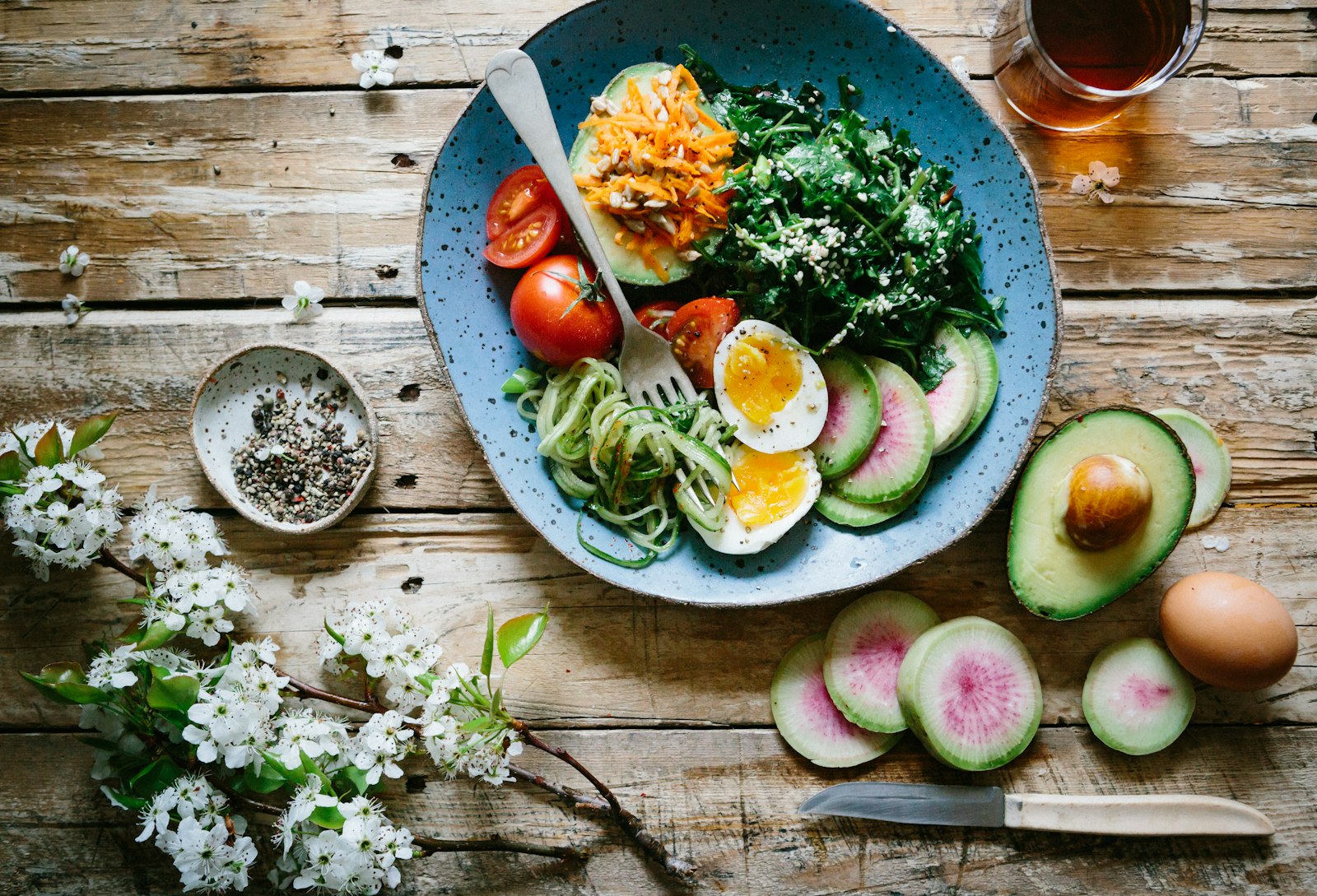
Meal-tracking apps work for some people, but plenty of us open one in January and quietly abandon it by March. The good news is that eating well has never required logging every bite. A visual, plate-based approach gives you most of the benefit of careful tracking with a fraction of the effort — and it travels well to restaurants, potlucks, and busy weeknights.
Why tracking everything wears people out
Logging food is a job. You weigh, you scan barcodes, you estimate the oil the restaurant used, and you feel a small sting every time the numbers drift. For people who thrive on data, that feedback loop is motivating. For everyone else, it can turn meals into homework and make eating feel adversarial. When the app becomes the reason you dread lunch, the tool has outgrown its usefulness. A gentler structure keeps the guardrails without the bookkeeping.
The plate method, explained
The idea is simple enough to sketch on a napkin. Fill about half your plate with vegetables and fruit, about a quarter with a protein source, and about a quarter with whole grains or starchy vegetables. Add a modest amount of fat for flavor — olive oil on the vegetables, a few slices of avocado, a spoonful of dressing. That is the whole system. Because it works in proportions rather than grams, it scales automatically to your appetite: a bigger plate on a hard training day, a smaller one on a quiet afternoon, same shape either way.
Breakfast can follow the same logic even when it doesn't look like a plate: yogurt with fruit and a sprinkle of granola, eggs with toast and sauteed greens, or a smoothie built from fruit, a protein source, and a handful of oats. The shape matters more than the geometry — roughly half plants, a solid share of protein, a sensible portion of starch.
Protein and fiber do the heavy lifting
Two features make this layout satisfying. Protein at every meal helps you feel full and supports the muscle you work hard to keep. Fiber from vegetables, fruit, beans, and whole grains slows a meal down, feeds you steadily, and adds volume without much effort. When half the plate is plants and a quarter is protein, you get both by default — no arithmetic required. Most people find that when those two boxes are checked, grazing between meals quiets down on its own.
Smart swaps that don't feel like sacrifice
The plate method leaves room for the foods you actually like. Prefer rice to quinoa? Keep the rice and mind the proportion. Love pasta? Make it the grain quarter and bulk the bowl out with roasted vegetables and a protein. Takeout night still works: order what you want, add a bag of frozen vegetables at home, and let the plate do its usual math. The goal is a durable pattern, not a perfect one.
Snacks follow the same relaxed pattern. Pair something from the plant half with something from the protein quarter — an apple with peanut butter, carrots with hummus, a handful of nuts alongside a piece of fruit — and you get staying power without any labels to read. None of this requires perfection; it only asks that most snacks, most days, lean in that direction.
Making it stick
Give the habit a month before judging it. Keep a few anchors in the kitchen — bagged salad, canned beans, frozen vegetables, eggs, yogurt — so the default plate is always buildable. If a meal goes sideways, the next plate is a clean slate. Consistency over weeks matters far more than precision at any single meal, and that is exactly the trade this method is designed to make.
If you cook for a family, the plate approach has one more advantage: everyone builds their own proportions from the same dishes on the table. The lifter takes extra protein, the runner takes extra grains, the kids take what they'll actually eat — one dinner, many plates, no separate menus and no arguments.
Comments
Sign in to join the conversation
Sign In